The e-commerce landscape is constantly evolving, and for entrepreneurs seeking a side hustle or a full-time income, dropshipping remains one of the most attractive business models. Its appeal is simple: you can sell products online without the headache of inventory management or upfront bulk purchases.
Among the myriad of online marketplaces, Etsy stands out as a premier destination for handmade, vintage, and unique creative goods. With millions of active buyers searching for items with a personal touch, it presents a massive opportunity for savvy sellers.
However, the rules of the game changed. You can no longer simply list generic products from AliExpress on Etsy and hope for the best. In fact, doing so is a fast track to a permanent ban. So, can you actually do Etsy dropshipping in 2026?
Yes, but only under strict conditions.
This ultimate guide aims to demystify Etsy dropshipping. We will explore exactly what the business model means on this platform, dissect Etsy's 2026 policies on what is legal and what is not, and provide a step-by-step roadmap to start and scale a successful, compliant, and profitable Etsy dropshipping business.
Key Takeaways
- Etsy is not for generic reselling: Traditional AliExpress-style dropshipping is banned. You must add value as a designer, curator, or creator to comply with Etsy’s 2026 policies.
- Approved models exist: Print-on-demand with your original designs, vintage curation, craft supplies, and disclosed production partners are the only ways to use third-party fulfillment.
- Profitability requires creativity: Success comes from niche authority, unique products, and SEO-optimized listings—not price wars. Etsy buyers pay a premium for authenticity.
- Scale with branding & automation: Use partners like EPROLO for custom packaging, fast shipping, and seamless Etsy integration to build a memorable brand that generates repeat sales.
Table of Contents
What is Etsy Dropshipping?
At its core, dropshipping is a business model where you, the seller, accept customer orders but pass them to a third-party supplier who handles storage, packaging, and shipping. You never physically touch the inventory.
However, Etsy dropshipping is fundamentally different from the traditional model used on platforms like Shopify or eBay. Etsy is not a platform for mass-produced, generic goods. Its entire brand is built on authenticity, creativity, and human connection.
Therefore, on Etsy, dropshipping cannot mean simply reselling a factory-made product from a catalog. Instead, it involves using a production partner to create items that you have designed or curated. Your role shifts from a pure retailer to a designer, artist, or curator. The focus is on the value you add—whether it's an original illustration for a t-shirt, a unique combination of items in a gift box, or the curation of a rare vintage find.
Is Dropshipping on Etsy Allowed?
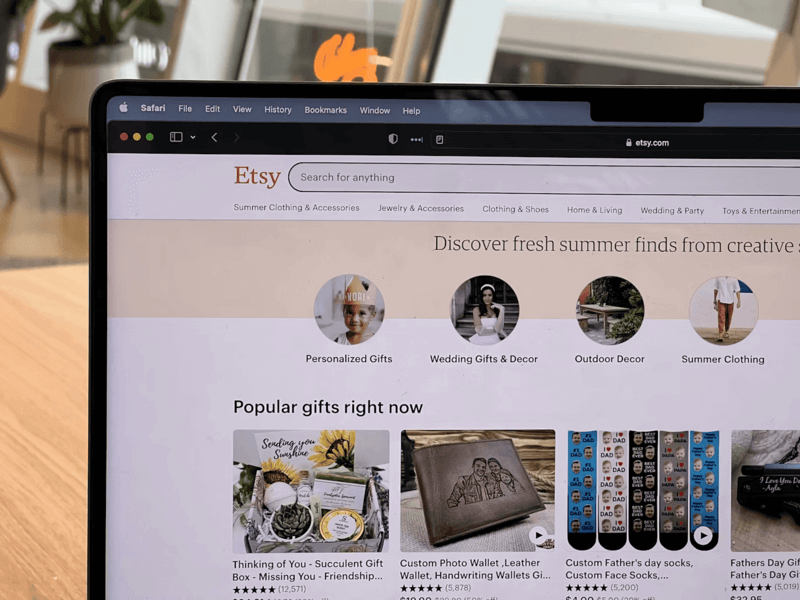
The short answer is no. Traditional, "pure" dropshipping of mass-produced goods is strictly prohibited. Etsy’s guidelines explicitly forbid reselling items you haven't made or designed yourself, with a few specific exceptions.
Here are some ways to use a third party for dropshipping on Etsy in 2026:
- Print-on-Demand (POD) with Your Original Designs: You create the artwork or design, and a POD partner (like Inkedjoy or Printify) prints it on a t-shirt, mug, poster, etc., and ships it to the customer. This is Etsy’s most accepted form of dropshipping.
- Vintage Curation: You can source and sell vintage items that are at least 20 years old. You must be the curator who finds these items and adds value by authenticating and describing their history.
- Craft and Party Supplies: You can source and sell supplies that enable other makers to create. This is one of the few areas where reselling new items is permitted, but the focus should be on unique, specialty items for creative projects.
- Production Partner Collaboration: If you design an item but need help manufacturing it (e.g., you design a ceramic planter but have it cast by a local studio), you can use a production partner. Crucially, you must disclose this partner in your shop.
The Hard "No's":
- AliExpress Dropshipping: You cannot take a product listing from AliExpress or a similar general supplier and list it on Etsy.
- Reselling Brand Name Goods: Unless you are selling a vintage 1990s band t-shirt, you cannot resell modern, brand-name items.
- Using Stock Photos: You must use your own images or accurate mockups, not generic supplier photos.
Failing to follow these rules can lead to listing removal, suspended funds, and permanent account termination.
Pros and Cons of Etsy Dropshipping
Understanding the advantages and disadvantages will help you build a realistic strategy.
Pros
- Low Upfront Costs: Like most dropshipping models, you don't pay for inventory until a customer buys it.
- No Inventory Management: Your production partner handles stock, packing, and shipping, freeing you to focus on design and marketing.
- Access to a Niche Audience: Etsy attracts millions of monthly visitors actively seeking unique, handmade, and vintage items. These buyers are often less price-sensitive and value originality.
- Lower Competition for Compliant Sellers: Because the rules are strict and deter many traditional dropshippers, those who operate legitimately face less competition in their niches.
- Scalable Model: Once you have winning designs, you can scale by adding variations, running ads, and expanding your product line without worrying about fulfillment capacity.
Cons
- Strict Policies and Enforcement: The risk of account suspension is real if you don't meticulously follow the rules regarding originality and transparency.
- Limited Control: You are reliant on your production partner for product quality and shipping speed. A mistake on their end results in a bad review on yours.
- High Fee Structure: Etsy charges a $0.20 listing fee, a 6.5% transaction fee on the sale price (including shipping), and a payment processing fee. These fees can eat into profit margins, so accurate pricing is vital.
- Marketplace Dependency: Your business lives and dies by Etsy's algorithm and policy changes. You don't own your customer list or traffic source in the same way you would with an independent store.
- Creative Input Required: This model requires genuine creative input, whether in design, curation, or copywriting. It’s not a "get-rich-quick" scheme for those unwilling to add value.
How to Start Dropshipping on Etsy
Ready to get started? Here is a step-by-step guide to launching your compliant Etsy dropshipping business.
Step 1: Set Up Your Etsy Seller Account
First, you need to establish your digital storefront. Go to Etsy.com and open your shop.
- Choose Your Shop Name: Pick a name that is memorable and hints at your niche (e.g., "SarcasticSvgShop" for POD designs). Avoid generic names or strings of numbers.
- Configure Your Preferences: Set your shop country, currency, and language. This determines how you get paid and how shipping is calculated.
- Complete Your Billing Setup: Add a credit card for Etsy's listing fees and link your bank account so Etsy can deposit your earnings.
Step 2: Find Your Niche and Secure Reliable Suppliers
This is the most critical decision. Your products and partners determine your shop's legality and profitability.
- Identify a Specific Niche: Don't be a "general store." A focused niche makes you an expert. Think "Minimalist Cat Jewelry" or "1950s Retro Kitchenware."
- Select Your Production Partner: For print-on-demand (POD), use platforms like Inkedjoy, Printful, or Printify. Inkedjoy is great for moving beyond basic POD into custom branding with your own tags and packaging. For vintage/craft supplies, source from estate sales, thrift stores, auctions, or specialty wholesalers.
Before listing a product, order a sample. You need to feel the fabric quality and assess the shipping speed personally. You cannot sell what you haven't vetted.
Step 3: Create Optimized Product Listings

Your listings are your sales team. They must work 24/7 to convince browsers to become buyers.
- Choose Products Strategically: Start with a core collection of 10-20 of your strongest designs or best finds.
- Craft SEO Titles: Your title is prime real estate for search. Instead of "Funny T-Shirt," write "Funny Sarcastic Office T-Shirt, Novelty Gift for Coworker, Unisex Cotton Tee."
- Write Detailed Descriptions: Describe the material, size, and care instructions. If using a production partner, be transparent. State, "This item is printed and shipped by a trusted production partner in the US."
- Utilize All 13 Tags: Use a mix of single words ("gift") and long-tail phrases ("birthday gift for brother") to help buyers find you.
Step 4: Price Your Products for Profit
Pricing is a balancing act. You must cover costs, pay yourself, and still offer value.
- Calculate Your Total Costs: Break down every expense: the supplier's base cost, Etsy's $0.20 listing fee, the 6.5% transaction fee (on the total including shipping), and the payment processing fee (roughly 3% + $0.25).
- Apply a Profit Formula: Use this calculation: (Supplier Cost + Etsy Fees + Desired Profit) / (1 - Transaction Fee Percentage) = Final Selling Price. This ensures fees don't eat your profit.
- Decide on Shipping: Consider offering "free shipping" to rank higher in search, but build the actual shipping cost into your item price.
- Research the Market: Check successful shops with similar products. If your designs are unique, you can often charge a premium.
Step 5: Master Etsy Marketing to Drive Traffic
A beautiful shop is useless without visitors. Use Etsy's built-in tools to get found.
- Optimize for Etsy Search: Refresh your tags periodically based on trends. Your "quality score" improves with positive reviews, so great customer service directly boosts your SEO.
- Launch Etsy Ads Strategically: Start with a low daily budget, like $1.00 to $5.00, to test the waters. Promote your top 5-10 best listings with proven sales history. Monitor your ad dashboard weekly.
- Create High-Impact Visuals: Use high-quality mockups that show your product in a real-life setting, not just on a white background.
You can also market your dropshipping store outside of Etsy for more traffic. Marketing strategies like posting on social media, working with micro-influencers, or running PPC advertising are also great ways to attract traffic.
Step 6: Automate Fulfillment for Smooth Operations
This is the path to 5-star reviews. Set up systems so orders run automatically.
- Integrate Your Supplier: Dropshipping suppliers like EPROLO, Inkedjoy, and Printful provide seamless integration with Etsy. This enables automatic order syncing so you never have to manually enter data.
- Monitor Order Confirmations: While automation handles the work, spot-check the first few orders to ensure the handoff is smooth.
- Ensure Tracking is Uploaded: Confirm your supplier sends tracking numbers back to Etsy automatically. This reduces "Where is my order?" messages.
- Handle Issues with Empathy: When problems occur, respond quickly. Use your relationship with your supplier to arrange reprints or refunds. Solving a problem gracefully is the fastest way to earn a loyal customer.
Scaling with EPROLO for Etsy Dropshipping
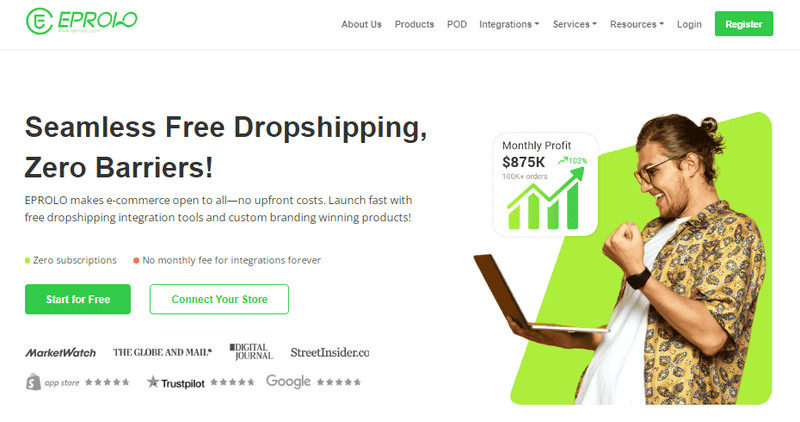
To truly scale your Etsy business efficiently, you need a robust partner that goes beyond basic POD services. This is where EPROLO comes into play.
EPROLO is a 100% free dropshipping supplier. It’s designed for merchants who are frustrated with slow shipping times and unstable supply chains. EPROLO helps you streamline your entire operation, from product sourcing to order fulfillment, all while helping you build a stronger brand.
Benefits of Using EPROLO for Your Etsy Shop
- Fast & Reliable Shipping: EPROLO has 26+ global warehouses to ensure fast delivery, which is vital for maintaining a high seller rating on Etsy.
- POD Feature: EPROLO offers 1500+ customizable products through its POD service, now powered by Inkedjoy. This makes it the perfect entry point for Etsy sellers looking to create unique, custom-designed items that comply with Etsy's handmade policies.
- Custom Branding Services: This is a game-changer for Etsy sellers. EPROLO offers private label and custom branding services. You can add your own custom tags, boxes, bags, and packing slips to every order. This makes your customer's unboxing experience feel professional and unique, building brand loyalty and justifying higher prices.
- Seamless Integration: EPROLO provides easy integration with Etsy, making it easy for sellers to automatically fulfill orders and track.
By using EPROLO, you’re not just dropshipping; you're building a brand that looks and feels professional, which is exactly what Etsy buyers are looking for.
Conclusion
Etsy dropshipping in 2026 is not about taking shortcuts; it's about taking a smart, creative, and compliant path to e-commerce success. The platform offers a unique opportunity to connect with a global audience of buyers who value authenticity and originality.
The key takeaways are clear: you must add value. Whether through original designs, thoughtful curation of vintage items, or carefully selected craft supplies, your role as a creator or curator is non-negotiable. By respecting Etsy's policies, being transparent with your customers, and using reliable partners like EPROLO to handle fulfillment and branding, you can build a profitable and sustainable business.
With the right approach, Etsy can be the perfect place to turn your creative vision into a thriving online empire.
Frequently Asked Questions (FAQ)
Does Etsy allow dropshipping?
No, Etsy does not allow traditional dropshipping. You cannot resell mass-produced items from a third-party supplier. However, you can use a production partner (like a print-on-demand service) to fulfill items that you have designed yourself. The key difference is that you must be the creator or designer of the product.
Can I dropship on Etsy if I don’t create the products myself?
Yes, but you must be the designer or curator. For example, with POD, the physical product is made by a partner, but the design printed on it must be your original creation. For vintage items, you must be the one to find and curate them.
Is dropshipping on Etsy profitable?
Yes, it can be. Since buyers seek unique items, you can often charge higher prices. Profitability depends on your niche, pricing strategy, and managing Etsy's fees effectively.
What are the best suppliers for Etsy dropshipping?
For print-on-demand, EPROLO, Inkedjoy, and Printful are excellent choices that integrate directly with Etsy. EPROLO provides a broader range of custom products, branding service, and reliable global shipping, perfect for both beginners and seasoned sellers.
What are the best products to dropship on Etsy?
The best products align with your niche and Etsy's creative ethos. Popular and profitable categories include:
- Print-on-Demand: Custom t-shirts, motivational posters, personalized jewelry, and quirky phone cases.
- Home Decor: Floral wall art prints, custom neon signs, and handmade-looking ceramic items.
- Personalized Gifts: Minimalist necklaces with initials, custom pet portraits, and birthstone jewelry.
- Vintage: Retro clothing, antique furniture, and collectibles from specific eras.
Read More from EPROLO Blog
Written by Suey
Suey is a content writer specializing in e-commerce and dropshipping, with 2+ years of experience. She creates SEO-friendly articles, guides, and marketing content that help online store owners attract traffic, engage customers, and grow profitable businesses.